
The Great Wall of Barshaw
Anne Gray, March 2021
Where would our Peace Garden be without its wall? Standing 12 feet high on three sides of the garden, it has protected the plants within the garden, and its visitors, for over two hundred years.
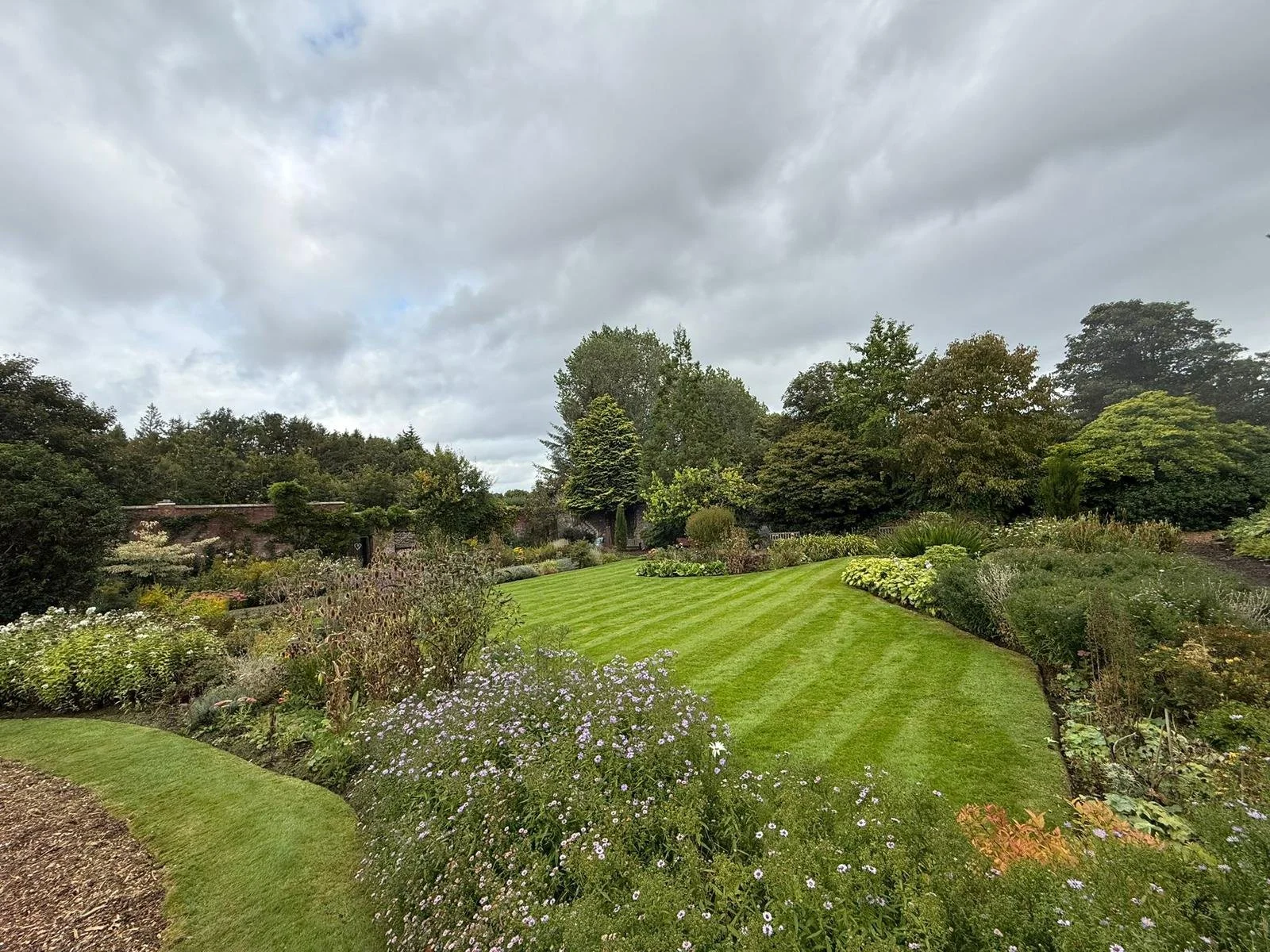
The walled garden and its visitors
Duncan Macintosh, one of the volunteers in the garden, has researched the origins of the garden, and has recorded the history of the wall. It is built in brick, he says, rather than stone, which was the most readily available building material at the time, because brick has better heat retaining properties than stone. This means that the wall could absorb heat from the sun during the day and radiate it back on to the plants at night, protecting them from frost.
The height of the wall also protected the plants within the garden from the prevailing westerly and cold easterly winds. Thus a much greater variety of plants could be grown in the garden than would survive in an unsheltered plot.
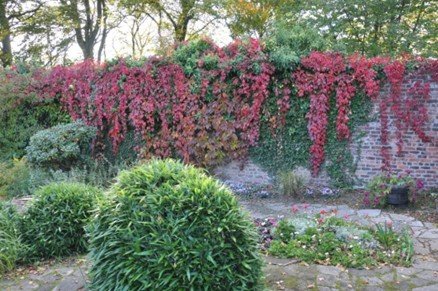
Originally the purpose of the garden was to grow fruit and vegetables for the big house on the estate. A row of greenhouses was constructed along the south facing wall to foster then-exotic fruits such as grapes and bananas. A system of heating pipes, fed from a furnace in lean-to bothies on the north side of the wall, yielded further warmth to these greenhouses. This wall, which is over 200 feet long, also had a line of espaliered fruit trees - apple and plum. In time, the purpose of the garden changed, and more decorative plants were fostered. Fruit trees gave way to a variety of flowering shrubs, such as Camellia, Jasmine and Old Man’s Beard Clematis, trailed mainly up the south facing wall. A red curtain of Virginia creeper cloaks the west wall in September.
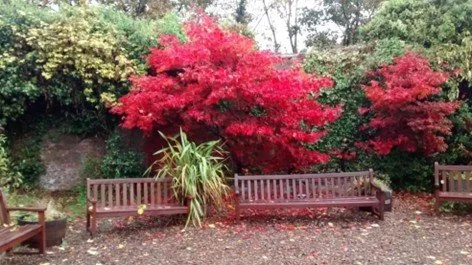
Some taller trees from other parts of the world were planted along the east and west walls, which gave them the needed protection from the Scottish weather. Several of these shrubs and trees have survived to this day, such as the Eucryphia. Ginko from Japan, and Japanese maples, with their brilliant colour in autumn, are later additions to the variety of species.
In some ways, however, the wall has been a victim of its own success. It has allowed many plants to grow prolifically, especially ivy! Since the Council has had to cut back on its maintenance of the garden, some of these invasive plants have taken over, and crowded out the more delicate interesting plants.
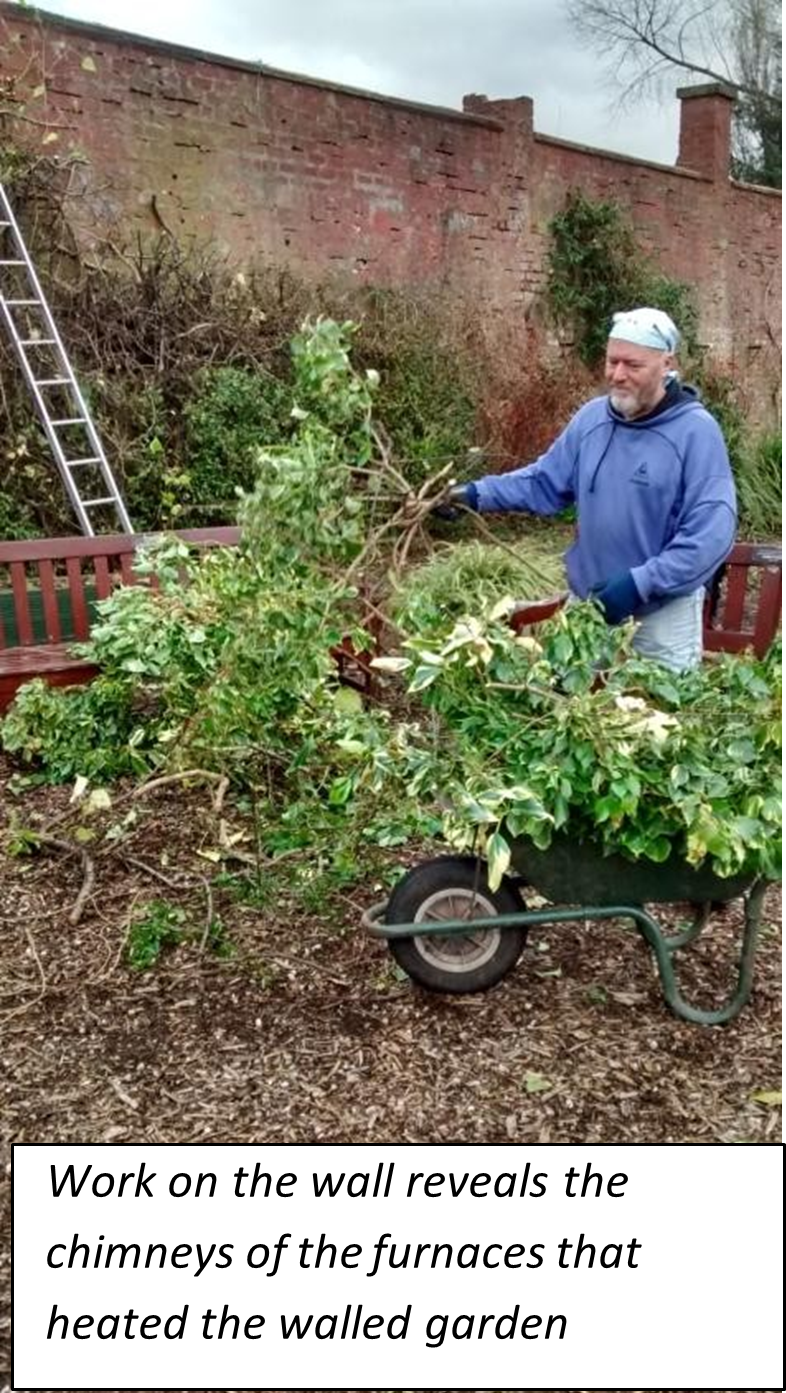

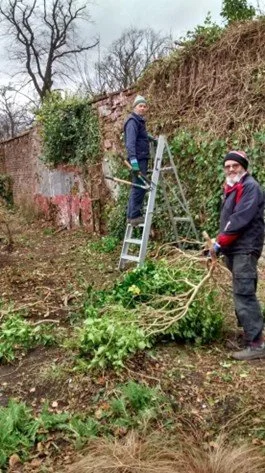
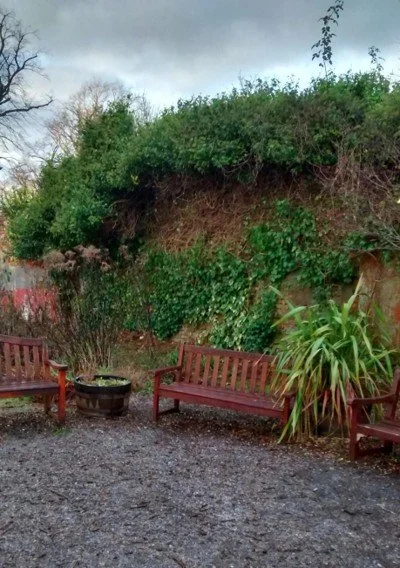
The FOBP, who now maintain the garden through volunteers, have a major task on their hands to cut back and contain this ivy. The season for completing major pruning is limited to the autumn and winter months, when there is no danger of birds nesting in the foliage.
On all three sides of the tall garden walls, thick trunks of ivy have spread up and over the walls in large tangled balls. In some places it has extended five feet upwards and outwards of the wall. Ivy, of course, develops roots which cling to their growing surface, and this means that removing the ivy is a delicate process of teasing it off the wall without damaging the brickwork. Sadly in several places, the wall is in need of repair, after up to 40 years of unchecked growth. It is good news, however, that our stonemason consultant has recently inspected the north wall and judges it to be in generally good shape, and the needed pointing work will take place soon.
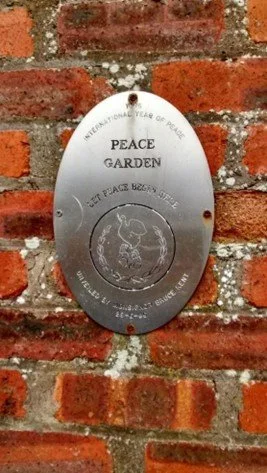
An example of the impact of this overgrowth is that in 1986, when the garden was designated as a Peace Garden, a commemorative plaque was installed on this south facing wall by Bruce Kent, the Chairperson of CND. Because of encroaching ivy, this plaque eventually needed to be transferred to the gate post at the entrance to the garden, where it can be seen today. At present, because of the extent of removal needed, the walls are looking rather bare in places. We are sure, however, that this will not long be the case.
Work began on the area round the back gate in the spring of last year, revealing a beautiful mature Wisteria, which was allowed to flower, free of competition last summer. This spring, a young Camellia is blooming freely along the south facing wall. The great sheltering properties of the wall will quickly allow other hidden gems, and newly planted shrubs, to flourish along its length, and delight us with their colours and perfume.
